Key Takeaways
- Sitting just off the coast of Venezuela in the Southern Caribbean Sea, Aruba is one of the Lesser Antilles islands, known for its pristine beaches, endless snorkeling and colorful capital, Oranjestad.
- A further 12,700 km south west of Aruba will bring you to Fiji, a Melanesian island with 333 islands and 540 islets scattered across the South Pacific, north of New Zealand and east of Australia. Like Aruba, Fiji offers sensational diving and snorkeling, breath taking beaches and diverse culture.
- With Fiji and Aruba sharing so many similarities could you find either on a map? And do you know how to get to Fiji or Aruba? Read on to discover more about the differences between Fiji vs Aruba.
YOUR GETAWAY TOFIJI VS ARUBA

With year-round sunshine, world-class beaches and an adventure-filled interior, it’s no wonder Aruba has been dubbed One Happy Island by locals and vacationers alike. It’s a slogan that has found its way onto its passport stamp, car license plates and the friendly reception you’ll receive from locals.
Divers will love Aruba as some of the biggest wrecks in the Caribbean are dotted off Aruba’s coast. One of the main attractions is Pedernalis – an oil tanker which was torpedoed in World War II. A lot of it is still intact, so you can peer into cabins and bathrooms in between clusters of coral. You’ll also be able to see rays, barracudas and turtles.
Bula! More than just a welcome greeting you’ll hear a lot of in Fiji, Bula represents the spirit of Fiji. This pristine island nation is also known as ‘the soft coral capital of the world’, and is home to more than 1,200 species of reef fish including angel, butterfly and lion fish as well as octopus, giant manta rays and moray eels.
Surrounded by water, much like Aruba, a lot of Fiji’s appeal is the world-class diving and snorkeling with excellent visibility, lots of dive sites and easy access – either straight off the beach or from boat tours and day trips.
The marine life in Fiji is home to colorful exotic fish, corals, sea snakes and dolphins as well as five species of sea turtles including Green, Loggerhead and Hawksbill.
FIJI VS ARUBA BEACHES

Aruba is circled by almost 70km of sandy shoreline. The stretch of beach that gets the most attention is the 11km sweep of sand linking Palm and Eagle beaches, the latter even making it into Trip Advisor’s Travellers’ Choice top 10 beaches in the world in 2021.
Palm Beach is Aruba’s original beach resort and it’s still one of the most popular. This is a classic Caribbean beach matched with designer shops, casinos and restaurants.
Eagle Beach is showered with accolades from Condé Nast Traveler to TripAdvisor and the waters are so clear that you’ll find a couple of scuba diving schools, allowing you to meet the sea turtles that glide around the rainbow coral reefs.
For a castaway feel, head to a hotel on Druif Beach. The beach rolls out for 11 kilometres, so there are plenty of footprint-free spots.

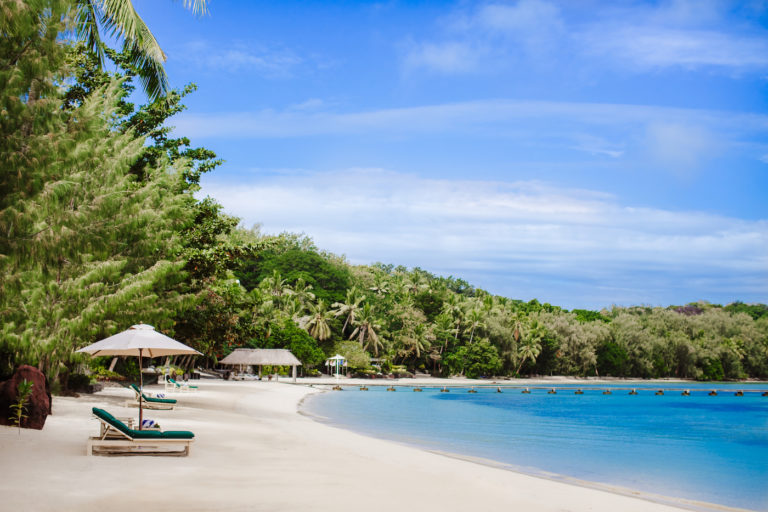
Fiji is home to hundreds of islands, all surrounded by the South Pacific Ocean, which means there are plenty of options when it comes to beaches – and we’re talking white-sand and warm azure waters. Plus Fiji’s outlying islands are all relatively close to the main island of Viti Levu which means they’re easy to get to and perfect for island hopping.
If you’re a fan of the US castaway reality TV show Survivor, then you may recognize some of the stunning beaches of the Mamanuca Islands. These islands are also home to some of the best surf breaks in the world, including Cloudbreak, off Tavarua Island.
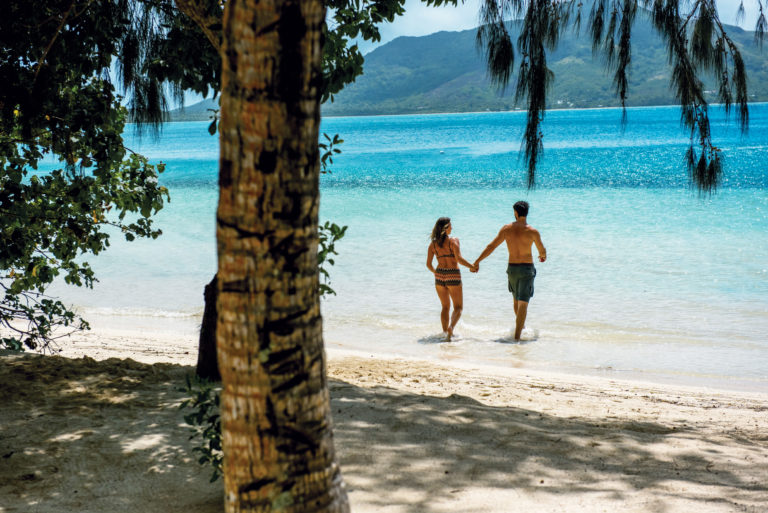
Another archipelago of volcanic islands with remote beaches is the Yasawa Islands, northwest of Viti Levu. With less crowds, a lack of big resorts, shops or roads, these unspoiled islands really do represent the true Robinson Crusoe style fantasy of a tropical island with palm-backed white-sand beaches, jungle-cloaked hills surrounded by shallow turquoise waters peppered with coral reefs.
Many of the islands in the Yasawa Islands archipelago are home to just one resort, like Turtle Island Resort, which has 12 private beaches perfect for honeymooners and couples seeking privacy and seclusion.
FIJI AND ARUBA ACTIVITIES

Fiji is naturally blessed with beauty which sees its lush interior packed with hiking tracks and mountain biking trails that make for a great day out exploring.
On Taveuniisland you can hike through the rainforest at Bouma National Park and head to the towering Tavoro Falls. This is a group of three waterfalls with pools that are perfect for swimming – float on your back you’ll be rewarded with snapshots of colour as Fiji is home to many colorful species of parrot.
Fiji’s highest peak is Mount Tomanivi on Viti Levu which stands tall at 1,324 metres (compared to the highest peak on the Cook Islands, which is 653 metres). The hike is not for the faint hearted, but you’ll be rewarded with breathtaking views across Fiji and the Pacific.
Aruba’s interior is the cherry on top of the island’s cake. On walking trails in Arikok National Park you’ll come across shoulder-high cacti, iguanas and two species of bird that can’t be found anywhere else in the world.
Oranjestad is the Dutch island’s capital, where the Caribbean influences take a backseat. The city’s ties to the Netherlands are clearly marked from the gabled roofs, cobblestoned streets, an old port and gingerbread houses painted in candy colors.
HOW DO YOU GET TO FIJI AND ARUBA?

Located just north off the coast of Venezuela, Aruba is popular with cruise ships and more than 150 flights from the US, Canada, several countries in South America, the Netherlands, the UK and other Caribbean islands.
Non-stop flight times to Aruba are approximately 30 minutes from Curacao Island, one and a half hours from Venezuela’s capital Caracas, three hours from Miami, four and a half hours from Atlanta and New York and around 10 and a half hours from Amsterdam.
Fiji is in the South Pacific, about 2,100 km north of Auckland, New Zealand. Fiji’s national carrier Fiji Airways operates daily direct flights from Sydney, Auckland, Los Angeles, San Francisco and Singapore.
Traveling to Fiji from the US will normally take around eight to 11 hours. From Australia or New Zealand, the flight time is just four to seven hours. Arriving in Nadi International Airport on Viti Levu, the main island of Fiji, you’ll either stay in one of the resorts on the main island or head out to one of the smaller islands by seaplane, boat transfer or helicopter.
HOW DOES THE WEATHER COMPARE IN FIJI AND ARUBA?

Aruba sits below the hurricane belt, which means it gets consistent weather with temperatures hitting the 28°C mark all year round. Then there are the gentle trade winds, which keep things cool and good for sunbathing. Plus it hardly ever rains, helping it lay claim to being the sunniest southern Caribbean island.
In Fiji, temperaturessit in a comfortable zone between 28°C and 31°C year round – perfect conditions for working on your tan, sailing the crystal-clear waters and exploring local reefs.
The best time to visit Fiji is between late March and early December, with sunny days and a warm tropical climate offering plenty of opportunities for exploring. Refreshing trade winds blow in from the south east to cool things off a bit, with some localised showers in the wet season from November to April.
CULTURE IN FIJI AND ARUBA

Descendants of the Melanesians and the Polynesians, Fijians today have created a delightfully unique, friendly and fascinating society that attracts tourists from all over the world.
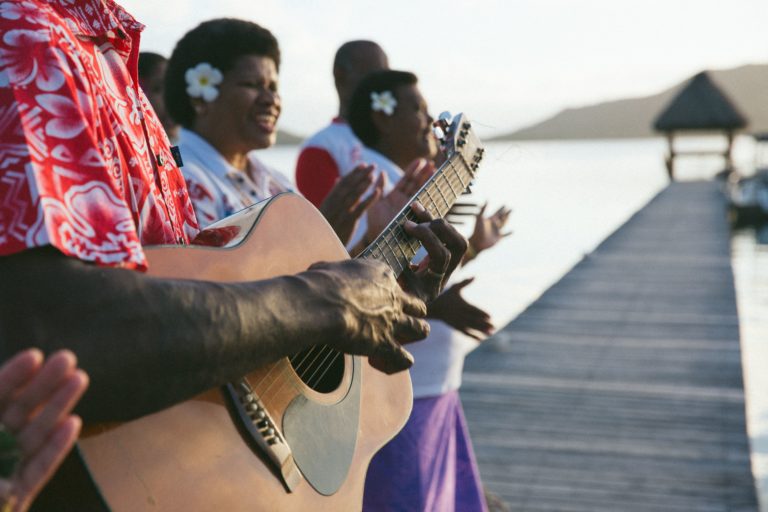
Fiji’s traditions and culture are displayed through traditional dancing and story-telling through song, such as Meke. Men and women perform in the meke, and the dance is viewed as a group collaboration in which men are expected to demonstrate strong, virile movements, while women are expected to be graceful and feminine.
Food is another strong element of Fijian culture, with sustainable food practices using local suppliers and traditional methods. Most vacationers to Fiji will take part in a lovo – a cooking tradition where fresh seafood, caught that day, is cooked in an underground oven.
At Turtle Island Fiji, most of the food is grown on the island or sourced locally. Guests can enjoy their own private tour of the five-acre vegetable garden, chicken coop, dairy cowsand pigs. The vegetable garden supplies 80% of the food that is enjoyed by the guests, which also includes beehives which provide delicious honey.
From its ancient Caiquetio Indian roots, through Spanish and Dutch rule, to its modern day standing as a constituent country of the Netherlands, Aruba’s history dates back centuries.
The culture of Aruba is acombination of the various cultures that have occupied and lived on the island, including indigenous peoples of South America, descendants of African slaves, and Spanish and Dutch colonialists.
Aruba’s culture comes alive in the spirited rhythms, art and dance. Venture off Palm Beach to San Nicolas, Aruba’s ‘Sunrise City’, and you’ll find a charming coastal town, home to galleries and colorful street art. Or follow the spirited sounds of steel drums and calypso to Aruba’s weekly Bonbini Festival. Meaning ‘welcome’, this weekly folkloric music and dance festival takes place in the outdoor courtyard of Fort Zoutman, Aruba’s oldest building in downtown Oranjestad every Tuesday evening to acquaint island visitors with Aruba’s culture and history through Caribbean music and dance as well as local art and food.
EXPLORE TURTLE ISLAND FIJI

With its appeal of barefoot luxury, Turtle Island Resort offers a slice of Fijian paradise. Shared with just 14 other couples, you will feel like you’ve got the 500-acre island to yourselves. Get in touch today to start planning your vacation to Turtle Island.